

Fall is a natural time to take stock of your backyard. After months of cookouts, gardening, outdoor gatherings, and summer storms, you probably have a good idea of which areas work well and which could use improvement.
Perhaps guests have worn a shortcut through the lawn, water collects beside the patio after heavy rain, or a slope makes part of the yard difficult to use. Instead of waiting until spring to think about these issues, fall offers an opportunity to start planning hardscaping improvements that can make your Northern Virginia backyard more functional, comfortable, and inviting.
What Is the Difference Between Landscape and Hardscape?
Landscape and hardscape are closely related, but they refer to different parts of an outdoor space.
Landscaping generally refers to the living elements of a property, including lawns, trees, shrubs, flowers, and planting beds. Hardscape refers to constructed, nonliving features such as patios, walkways, retaining walls, steps, fire pits, and paver borders.
The most effective backyard designs often combine both. A paver patio, for example, creates a durable space for dining and entertaining, while surrounding plants help soften its edges and connect it visually to the rest of the yard. In this way, hardscaping provides structure while landscaping adds color, texture, and life.
Why Plan Hardscaping in the Fall?
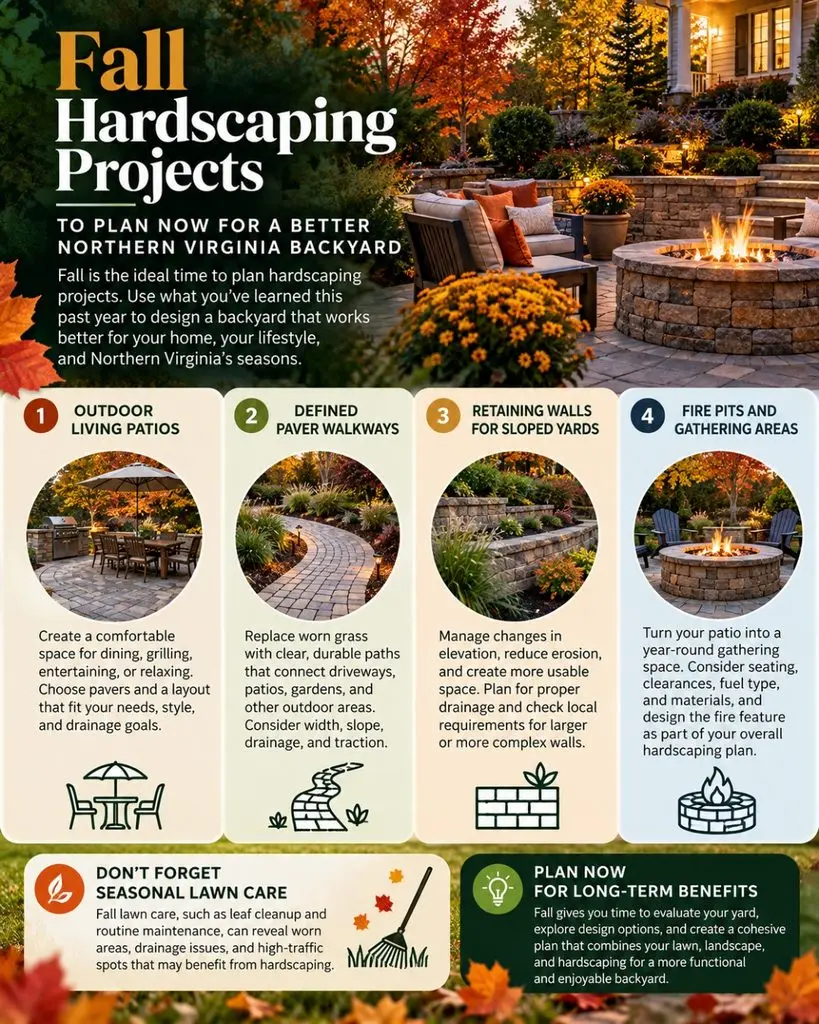
By fall, homeowners have had an entire spring and summer to observe how their yards perform. That makes it easier to spot practical problems such as muddy pathways, erosion, cramped patios, poor drainage, and awkward transitions between different areas.
Fall can be a useful time to turn those observations into plans. Virginia Cooperative Extension recommends starting landscape and stormwater planning with a site assessment that considers features such as paved areas, steep slopes, drainage paths, and the direction of runoff. These are important factors to evaluate before adding patios, walkways, retaining walls, or other hardscaping features.
For homeowners considering hardscaping, this planning period can be used to evaluate how the yard performed throughout the warmer months and determine which improvements should take priority.
Starting the planning process now also gives homeowners time to think carefully about patio dimensions, walkway routes, retaining walls, drainage, materials, and how individual improvements can work together. Instead of making isolated changes, homeowners can develop a more cohesive plan for a backyard that better supports how they want to use it.
Outdoor Living Patios
A well-designed patio can become the foundation of a backyard. It can provide dedicated space for outdoor dining, grilling, entertaining, or simply relaxing at the end of the day.
Before choosing pavers, consider how the space will actually be used. A dining table, grill, fire feature, and lounge furniture all require sufficient room for comfortable circulation.
Material selection also plays an important role in the finished space. Consider durability, maintenance needs, drainage, appearance, and how the pavers will complement the home and surrounding landscape.
Defined Paver Walkways
If family members and guests repeatedly take the same shortcut across the lawn, the worn grass may be telling you exactly where a walkway belongs.
These patterns can become especially noticeable during seasonal lawn care, when leaf removal, mowing, and other fall maintenance expose thin turf, muddy areas, and frequently traveled routes. Installing a walkway in the right location can reduce repeated foot traffic across the lawn while creating a more convenient path through the property.
Paver walkways can establish clear routes between driveways, gates, patios, gardens, and other outdoor spaces. When planning them, consider width, slope, drainage, traction, and how the materials coordinate with existing hardscaping. A defined walkway can also make the backyard feel more intentional by visually connecting previously separate areas.
Retaining Walls for Sloped Yards
Sloped yards can present challenges ranging from erosion to difficult mowing and limited usable space. Retaining walls can help manage changes in elevation while creating more defined areas within the landscape.
Depending on the property, a wall may support a planting bed, border a patio, or help create terraced areas. Drainage is especially important because water accumulating behind a retaining wall can create unnecessary pressure.
Larger or more complex walls may also require professional engineering or permits, so homeowners should investigate local requirements before construction.
Fire Pits and Gathering Areas
A fire feature can turn a basic patio into a natural gathering place and make the backyard more enjoyable during cooler weather.
Planning should go beyond simply deciding where to place the fire pit. Consider seating arrangements, walking space, fuel type, appropriate clearances, and the materials surrounding the feature.
Designing the fire area as part of the broader hardscaping plan can create a more cohesive result than adding it as an isolated feature later.
Steps and Backyard Transitions
Elevation changes can make movement between outdoor areas inconvenient or uncomfortable. Well-placed steps create intentional transitions between patios, lawns, walkways, decks, and terraced areas.
Materials can often be coordinated with nearby pavers or retaining walls, helping the steps feel like part of the overall design rather than an afterthought.
Hardscape Drainage Considerations
Drainage should be considered before expanding patios, installing walkways, or making other major changes.
Watch your property during heavy rain. Where does the water travel? Where does it pool? Are there areas showing erosion?
Answers to these questions can influence grading, surface selection, and the placement of new features. Effective hardscaping should work with the property’s drainage patterns rather than cover up an existing water problem.
How Should You Prioritize Fall Hardscaping Projects?
Start with functional concerns. Drainage problems, erosion, unstable slopes, and difficult transitions generally deserve attention before decorative additions.
Next, consider circulation and gathering areas. Determine where people naturally walk and where you want them to spend time. Patios, walkways, retaining walls, steps, and fire features can then be planned as parts of one connected backyard rather than separate projects.
Start Planning a Better Northern Virginia Backyard
Fall gives Northern Virginia homeowners an excellent opportunity to look back at how their outdoor spaces performed throughout the warmer months. The problems you noticed this summer can become the starting point for smarter improvements.
Planning a hardscaping project for your Northern Virginia property? Craig’s Lawn Care can help you evaluate your backyard and plan patios, walkways, retaining walls, and other improvements around your property’s layout and drainage. Contact our team to start planning your project.