
Lawn mowing is one of the most important aspects of lawn care because the way you mow affects grass growth, weed control, drought resistance, and overall curb appeal. Yet many homeowners overlook how much impact proper mowing can have on the health of their lawn.
According to the Cary Institute of Ecosystem Studies, nearly 80% of Americans have a lawn and collectively spend more than $10 billion each year on landscaping products and professional services to maintain their outdoor spaces.
With so much time and money invested in lawn care, understanding proper lawn mowing practices can help homeowners protect that investment while improving the long-term health and appearance of their lawns.
The Role of Lawn Mowing in Your Yard
Lawn mowing is one of the most important maintenance tasks for keeping your yard healthy and attractive. Beyond improving appearance, proper mowing supports stronger grass growth and helps prevent common lawn problems.
Encourages Thicker Grass Growth
Regular mowing stimulates grass to grow laterally rather than vertically. This creates a denser lawn that can naturally crowd out weeds.
Promotes Stronger Root Development
Maintaining the proper mowing height allows grass to develop deeper root systems. Strong roots help the lawn access water and nutrients more efficiently.
Improves Resistance to Weeds and Pests
Healthy, well-maintained grass leaves less space for weeds to establish themselves. Consistent mowing also reduces the conditions that attract certain lawn pests.
Helps the Lawn Withstand Drought Stress
Grass that is mowed correctly retains moisture more effectively and experiences less stress during hot weather. This can help keep your lawn greener during dry periods.
Enhances Curb Appeal
A freshly mowed lawn instantly makes a property look cleaner and more cared for. Regular mowing contributes to a polished appearance that can improve overall property value.
How Often Should You Mow Your Lawn?
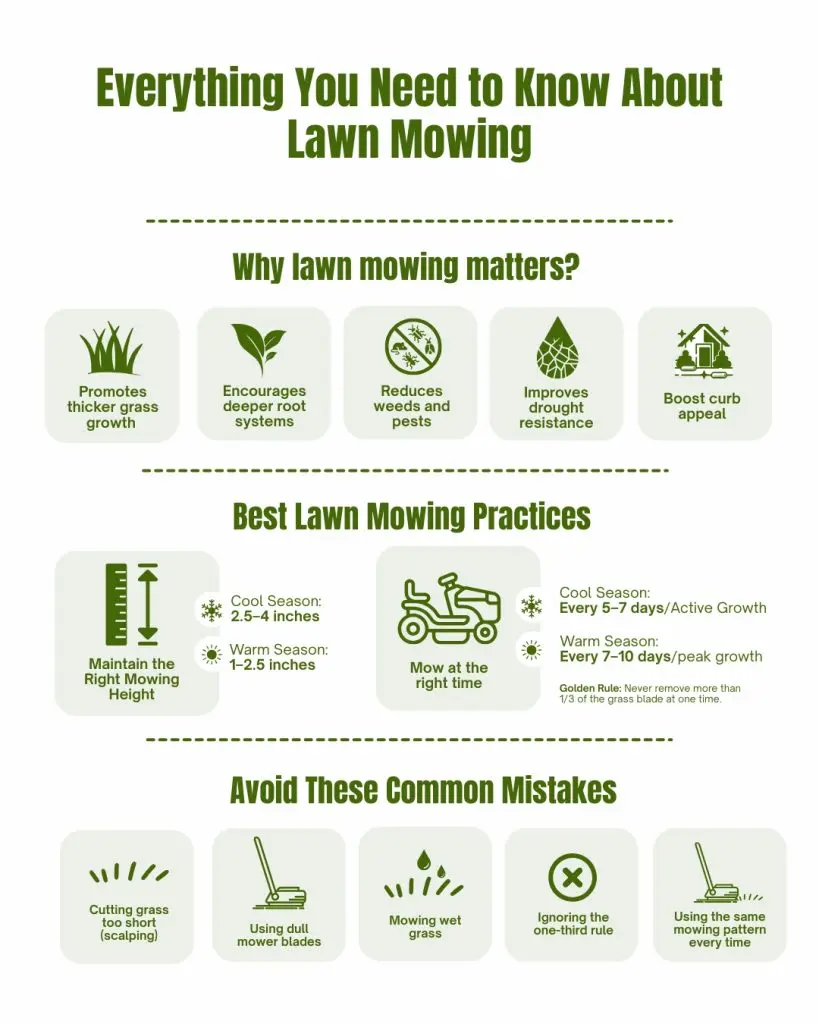
There is no fixed mowing schedule that works for every lawn. The ideal frequency depends on your grass type, the season, weather conditions, and how quickly your lawn grows after fertilization.
Grass Type
Different grass species grow at different rates, which directly affects how often you need to mow. Cool-season grasses like Kentucky bluegrass and fescue may need mowing every 5–7 days during their active growing periods, while warm-season grasses such as Bermuda and Zoysia often require mowing every 7–10 days during peak growth.
Season
Grass growth changes throughout the year. During spring, when growth is most vigorous, many lawns need mowing every 5–7 days, while slower growth in summer or fall may allow you to extend mowing intervals to 7–14 days, depending on conditions.
Weather Conditions
Rainfall and temperature have a major impact on growth rates. Lawns often require mowing every 5–7 days during periods of consistent rain and moderate temperatures, while drought, extreme heat, or extended dry spells may reduce mowing needs to every 10–14 days or longer.
Fertilization Practices
Fertilizer encourages faster growth, meaning recently fertilized lawns typically need more frequent mowing. If your lawn receives regular fertilizer applications, you may find yourself mowing every 5–7 days to maintain the desired height and appearance.
Rather than following a strict calendar, pay attention to how quickly your grass grows. One of the most important guidelines to follow is the one-third rule, which states that you should never remove more than one-third of the grass blade during a single mowing session. Removing too much grass at once can stress the lawn, weaken root development, and increase the risk of weeds and disease.
Choosing the Right Lawn Mowing Height
Mowing height has a major impact on lawn health. Grass that is cut too short becomes more vulnerable to weeds, drought stress, and disease, while taller grass helps shade the soil, retain moisture, and promote deeper root growth.
The ideal mowing height depends on your grass type:
- Kentucky Bluegrass: Maintain between 2.5 and 3.5 inches
- Tall Fescue: Maintain between 3 and 4 inches
- Fine Fescue: Maintain between 2.5 and 4 inches
- Perennial Ryegrass: Maintain between 2 and 3 inches
- Bermudagrass: Maintain between 1 and 2 inches
- Zoysiagrass: Maintain between 1 and 2.5 inches
- St. Augustinegrass: Maintain between 2.5 and 4 inches
- Centipedegrass: Maintain between 1.5 and 2 inches
As a general rule, cool-season grasses perform best when kept between 2.5 and 4 inches, while most warm-season grasses thrive at 1 to 2.5 inches. Keeping grass within these ranges allows it to develop stronger roots and better resist environmental stress.
Seasonal adjustments are also important. During summer, raising your mowing height by about ½ to 1 inch can help the lawn retain moisture and withstand heat. In spring and fall, you can gradually return to the standard recommended height for your grass type to encourage healthy growth and maintain a tidy appearance.
Essential Lawn Mowing Equipment
The right equipment makes lawn mowing more efficient and helps you achieve a cleaner, healthier cut. The best mower for your property depends on your lawn size, terrain, and maintenance preferences.
Push Mowers
Push mowers are best suited for small, flat lawns. They are affordable, easy to store, and provide excellent control when mowing around landscaping features.
Self-Propelled Mowers
Self-propelled mowers use a drive system that helps move the mower forward, reducing physical effort. They are a popular choice for medium-sized yards and properties with gentle slopes.
Riding Mowers
Riding mowers are designed for large properties where a push mower would be time-consuming. They allow homeowners to cover more ground quickly while maintaining a consistent cut.
Robotic Mowers
Robotic mowers automatically mow the lawn on a programmed schedule with minimal homeowner involvement. They are ideal for those who want convenience and regular maintenance without the manual work.
Regardless of the mower type you choose, proper maintenance is essential for achieving the best results.
Best Lawn Mowing Practices for a Healthier Yard
Proper lawn mowing involves more than simply cutting the grass when it gets too tall. Following a few best practices can improve lawn health, encourage stronger growth, and help your yard maintain a clean appearance throughout the growing season.
- Mow When the Grass Is Dry
Dry grass is easier to cut evenly and is less likely to clump underneath the mower deck. It also reduces the risk of spreading lawn diseases and creating slippery mowing conditions. - Follow the One-Third Rule
Never remove more than one-third of the grass blade during a single mowing session. Cutting too much at once can shock the grass and weaken its ability to recover and grow. - Change Your Mowing Pattern
Alternating mowing directions prevents the grass from leaning in one direction over time. It also helps reduce soil compaction and creates a more uniform appearance across the lawn. - Keep Mower Blades Sharp
Sharp blades create clean cuts that heal quickly and help maintain a healthier lawn. Dull blades tear the grass, leaving ragged edges that can turn brown and become vulnerable to disease. - Leave Grass Clippings When Possible
Grass clippings break down quickly and return valuable nutrients to the soil. This natural recycling process can reduce fertilizer needs and support healthy growth. - Adjust Mowing Height Seasonally
Raising the mower height during summer helps the grass retain moisture and better withstand heat stress. During cooler months, returning to the recommended mowing height can promote healthy growth and appearance.
Common Lawn Mowing Mistakes to Avoid
Even with the best intentions, certain mowing habits can negatively affect lawn health. Avoiding these common mistakes can help keep your grass stronger, greener, and more resilient throughout the year.
- Cutting Grass Too Short
Scalping removes too much of the grass blade and places unnecessary stress on the lawn. It can also expose the soil to sunlight, encouraging weed growth and moisture loss. - Using Dull Mower Blades
Dull blades tear grass instead of cutting it cleanly, resulting in a damaged appearance. Torn grass is more susceptible to disease, pests, and environmental stress. - Mowing Wet Grass
Wet grass often produces uneven cuts because the blades bend under the mower rather than standing upright. Clumps of wet clippings can also block sunlight and create ideal conditions for fungal growth. - Ignoring the One-Third Rule
Allowing the lawn to become overgrown before mowing can lead to excessive grass removal in a single cut. This can weaken root systems and slow the lawn’s recovery. - Using the Same Mowing Pattern Every Time
Repeatedly mowing in the same direction can cause grass to develop a permanent lean. Over time, this habit may also contribute to soil compaction and uneven wear patterns. - Failing to Adjust for Seasonal Growth Changes
Grass growth rates vary throughout the year depending on temperature and weather conditions. Keeping the same mowing schedule year-round can lead to unnecessary stress or overgrowth.
When Do You Stop Mowing the Lawn?
Many homeowners wonder when it’s time to put the mower away for the season.
In most regions, lawn mowing should continue until grass growth slows significantly and enters dormancy. This usually occurs after consistent cold temperatures arrive.
The final mow of the season is important. Grass should not be left excessively tall going into winter, as long blades can become matted and create conditions for disease. At the same time, cutting too short can leave the lawn vulnerable to winter damage.
Homeowners in warmer climates may continue lawn mowing throughout much of the year, although mowing frequency often decreases during cooler months.
Should You Hire a Professional Lawn Mowing Service?
Professional lawn mowing services provide consistent maintenance, expert care, and access to commercial-grade equipment. They can save homeowners significant time while ensuring the lawn receives proper attention.
However, DIY lawn mowing can still be a practical option for smaller properties or homeowners who enjoy maintaining their yards themselves. The right choice depends on your schedule, budget, property size, and lawn care goals.
Ready for a healthier, better-looking lawn without the hassle? Craig’s Lawn Care provides reliable lawn mowing services designed to keep your yard looking its best all season long. Contact our team today for a free estimate and let us handle the mowing for you.
Conclusion
Lawn mowing is much more than keeping grass short. Proper mowing height, frequency, equipment maintenance, and seasonal adjustments all contribute to a healthier, stronger lawn.
By following proven lawn mowing practices and avoiding common mistakes, you can improve your lawn’s appearance, encourage deeper root growth, and reduce long-term maintenance challenges.
Before your next mow, take a closer look at your current habits. Are they helping your lawn thrive, or could a few small changes lead to better results throughout the year?