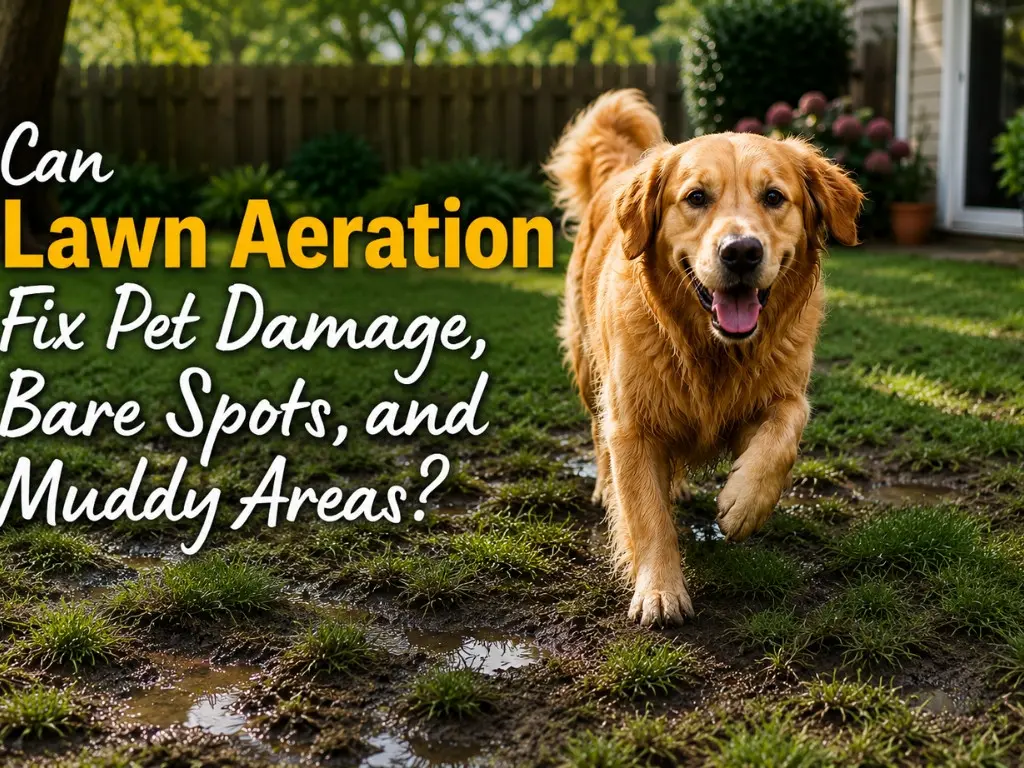
Your lawn faces constant stress from pets, foot traffic, and heavy rain, which can lead to bare spots, muddy areas, and thinning grass. While many homeowners try watering or fertilizing more, the real issue often starts beneath the surface with compacted soil.
When soil becomes compacted, water, oxygen, and nutrients struggle to reach the roots. Lawn aeration helps loosen the soil, improve root growth, and create healthier conditions for damaged grass to recover over time.
Damage Beneath the Grass
Most lawn problems start beneath the grass, not above it. Pets, foot traffic, lawn equipment, and heavy rainfall gradually compress the soil. As the soil hardens, roots struggle to spread and absorb the nutrients they need to survive.
Once that happens, several common lawn problems begin to appear:
- Bare patches near fences, patios, and walkways
- Muddy spots after rainstorms
- Yellow or brown urine stains
- Thin grass in active areas
- Standing water that drains slowly
Dog urine can create additional problems because it contains concentrated nitrogen. Small amounts of nitrogen help grass grow, but repeated exposure in the same area can burn the lawn and weaken the surrounding roots.
Many homeowners assume these issues require complete lawn replacement. In reality, damaged lawns often need healthier soil conditions more than anything else.
How Lawn Aeration Works
Lawn aeration removes small plugs of soil throughout the yard. This process loosens compacted ground and creates channels that allow water, oxygen, and nutrients to move deeper into the root zone.
Core aeration delivers the best results because it removes actual soil plugs instead of simply punching holes into the surface.
Together, these benefits create healthier soil conditions that allow grass to grow stronger and recover more effectively. Improved airflow, water penetration, and root development all help lawns become thicker, greener, and more resistant to damage over time.
Without proper airflow and drainage, even healthy grass struggles to thrive.
According to Penn State Extension, a compacted soil layer as thin as ¼ to ½ inch can significantly restrict water infiltration, nutrient penetration, and oxygen exchange in lawns, which weakens root development and overall turf health.
Can Lawn Aeration Fix Pet Damage?
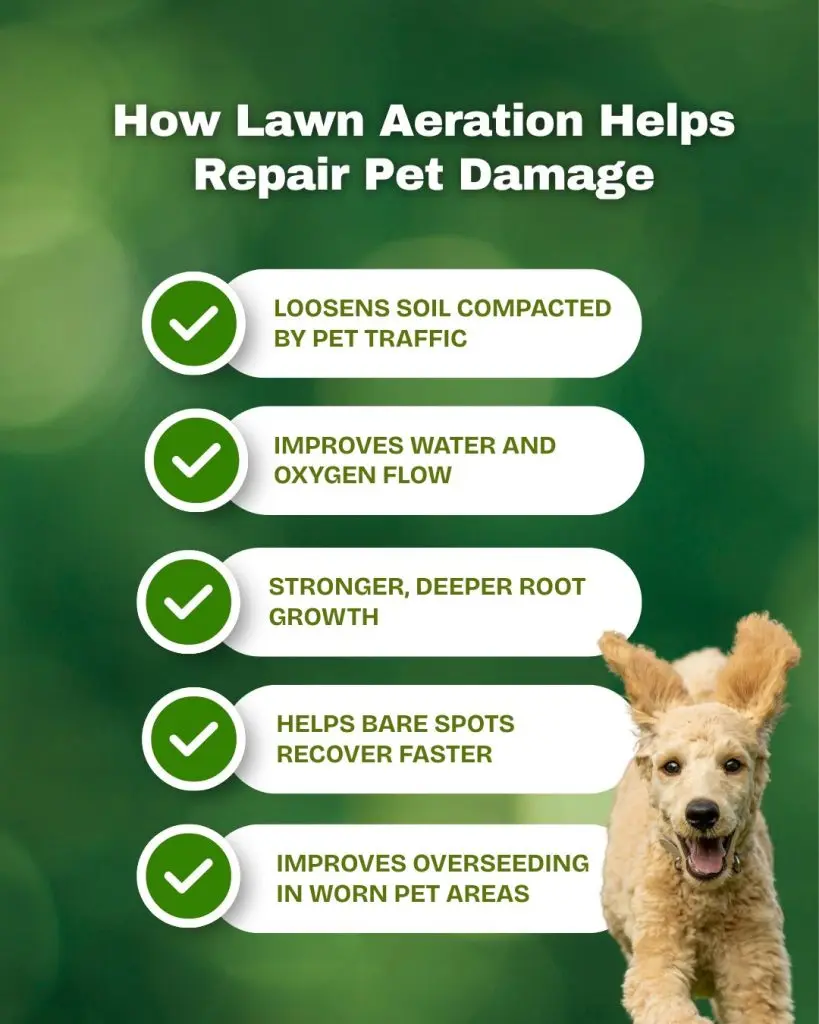
Lawn aeration can help repair many forms of pet-related lawn damage, especially when soil compaction plays a major role.
Dogs naturally create worn paths as they move through the yard every day. Over time, repeated activity hardens the soil and weakens the grass. Aeration loosens that compacted soil, giving roots room to spread again.
It can also improve recovery in areas affected by mild urine damage.
Still, lawn aeration is not a complete solution for every situation.
If the grass has died completely, the damaged areas will likely require overseeding after aeration. Fortunately, aeration creates ideal conditions for seed germination by improving seed-to-soil contact.
Pet owners often see the best results when lawn aeration is combined with a few simple maintenance habits:
- Water urine spots immediately
- Rotate pet activity areas
- Avoid excessive fertilizer use
- Overseed thin sections after aeration
- Use durable grass varieties for active lawns
Consistency matters. Lawns exposed to heavy pet traffic often benefit from yearly aeration to maintain healthy growth.
Can Lawn Aeration Help Bare Spots Grow Back?
Bare spots usually point to deeper soil issues. When soil becomes compacted, grass seed struggles to establish roots. Water often runs across the surface instead of soaking into the ground where the roots need it most.
Lawn aeration improves the growing environment beneath the lawn, making it easier for new grass to establish itself.
For a stronger recovery, homeowners should combine aeration with overseeding. This combination helps grass grow thicker, healthier, and more evenly over time. A simple repair process often includes:
- Aerating the lawn thoroughly
- Overseeding damaged sections
- Applying starter fertilizer
- Watering consistently during germination
Some homeowners notice early improvement within a few weeks. Full recovery, however, depends on the severity of the damage, weather conditions, and grass type.
If bare spots continue returning, additional problems may exist. Poor drainage, excessive shade, or repeated pet traffic may still need attention.
Can Lawn Aeration Solve Muddy Lawn Problems?
Muddy lawns often develop because water cannot move properly through compacted soil. Instead of soaking into the ground, rainfall collects near the surface and creates soggy areas that remain wet for long periods.
Lawn aeration improves water movement by opening pathways throughout the soil. This allows moisture to penetrate deeper into the root zone instead of pooling on top of the lawn.
For many homeowners, these improvements can significantly reduce muddy conditions.
Still, aeration has limits. If your property has severe grading issues, dense clay soil, or irrigation problems, additional drainage solutions may be necessary. Lawn aeration works best when compaction is the primary issue.
When Should You Aerate Your Lawn?
The best time for lawn aeration depends on your grass type. Cool-season grasses like fescue and Kentucky bluegrass respond best in early fall or spring, while warm-season grasses like Bermuda and Zoysia should be aerated in late spring or early summer.
Your lawn may also need aeration if you notice standing water, compacted soil, thin grass, heavy pet traffic, or excessive thatch buildup. For busy households with pets or children, annual aeration can help maintain a healthier lawn year-round.
Final Thoughts
So, can lawn aeration fix pet damage, bare spots, and muddy areas? In many cases, yes. By relieving soil compaction, lawn aeration improves drainage, strengthens roots, and helps grass recover naturally over time.
If your lawn struggles with thinning grass or muddy patches, Craig’s Lawn Care can help restore healthier soil and a stronger lawn with professional aeration services.