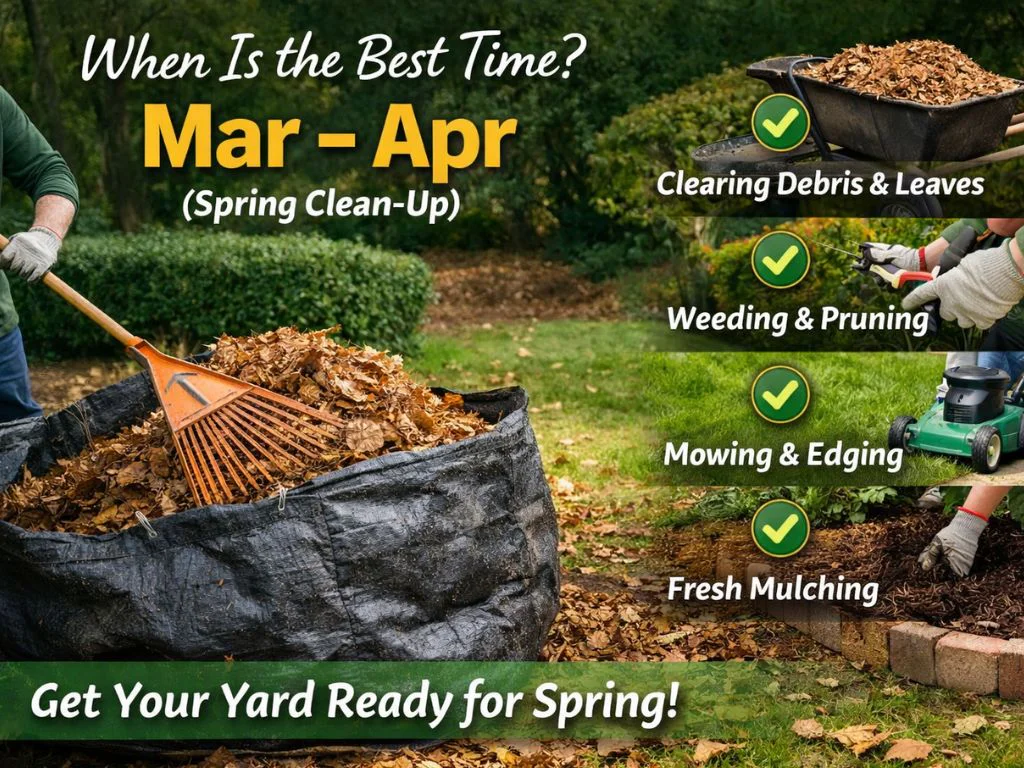
If you own a home in Northern Virginia, you already know the weather doesn’t stay consistent for long. Winters bring freezing temperatures and freeze-thaw cycles. Spring arrives with heavy rain. Summer follows with heat and humidity that stress your lawn and plant beds.
That’s why mulching isn’t just about appearance. It plays a direct role in protecting your soil, supporting plant health, and reducing maintenance throughout the year.
But timing matters.
Apply mulch too early, and you can slow plant growth. Apply it too late, and weeds and heat have already taken hold. If you want real results, you need to understand when mulching works best in this region.
When Is the Best Time to Mulch in Northern Virginia?
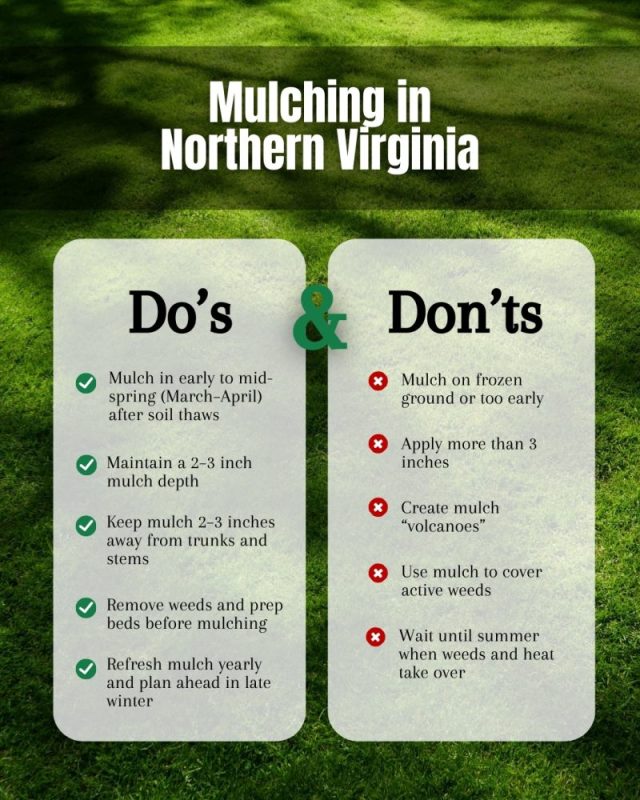
For most homeowners, the best time for mulching in Northern Virginia is early to mid-spring, typically between March and April. This timing gives your landscape protection before summer heat and aggressive weed growth begin.
During winter, existing mulch breaks down and thins out. Snow, ice, and wind shift it around. By the time spring arrives, many beds have exposed soil or compacted layers that no longer provide insulation. Refreshing mulch in early spring restores that protection when your plants are entering their active growing season.
Spring mulching helps:
- Retain soil moisture before temperatures climb
- Prevent weed seeds from germinating
- Regulate soil temperature as roots begin growing
- Improve the overall appearance of your property
If you wait until late May or June, weeds may already be established. At that point, mulch becomes more of a cover-up than a preventative solution.
What Happens If You Mulch Too Early?
While early spring is ideal, applying mulch too soon can cause problems. If the ground is still frozen, thick mulch can trap cold moisture in the soil and slow down root warming. Plants need warming soil temperatures to break dormancy and grow properly.
A simple guideline is to wait until the soil has thawed and daytime temperatures consistently reach the 50s. In Northern Virginia, this typically happens by mid to late March.
Is Fall Mulching a Good Idea?
Fall mulching can also be beneficial, but its purpose is different. Instead of preparing your landscape for growth, fall mulch protects roots from harsh winter conditions.
Homeowners often apply mulch in October or November to:
- Insulate plants before freezing temperatures
- Reduce soil erosion during winter storms
- Protect newly planted trees and shrubs
If you only plan to mulch once per year, spring offers the most overall value. However, fall mulching can be helpful for new plantings or areas that need extra winter protection.
How Often Should You Replace Mulch?
In most cases, mulch should be refreshed once per year. Organic mulch naturally decomposes over time, which improves soil health. However, as it breaks down, it becomes thinner and less effective at preventing weeds and retaining moisture.
A properly maintained mulch layer should remain about 2 to 3 inches thick. If it’s thinner than that, weeds can push through and soil will dry out faster. If it’s much thicker, it can prevent oxygen from reaching plant roots and trap excess moisture against stems.
Walk your property and check your beds. If you see exposed soil, faded color, compacted mulch, or increased weed growth, it’s likely time for a refresh.
High-traffic areas may require more frequent attention. Beds near walkways, driveways, and slopes tend to thin out faster due to foot traffic and water runoff.
Why Mulching Matters in Northern Virginia’s Climate
Northern Virginia’s climate makes mulching especially important. Many properties have clay-heavy soil, which holds water but drains slowly. In summer heat, clay soil hardens and cracks. In winter, it expands and contracts during freeze-thaw cycles.
Mulch acts as a buffer between extreme weather and your soil.
It helps reduce evaporation during hot months, protects roots from temperature swings, limits erosion from heavy rainfall, and improves soil structure as it decomposes. Over time, consistent mulching can reduce plant stress and lower water usage.
If you’ve noticed your plants struggling in July or weeds spreading aggressively in spring, inconsistent mulching may be part of the issue.
If you want a full breakdown of what your lawn and landscape need throughout the year, review our seasonal lawn care service checklist.
Common Mulching Mistakes to Avoid
Mulching helps your landscape, but only when it’s done correctly. Small application mistakes can lead to plant stress, root damage, and ongoing maintenance issues.
- Creating mulch “volcanoes” around trees
Piling mulch high against the trunk traps moisture and limits airflow, which can lead to rot and insect problems. Keep mulch 2 to 3 inches away from tree trunks and plant stems to protect root health.
- Applying too much mulch
A layer thicker than 3 inches can block oxygen from reaching the roots and create overly damp soil conditions. Stick to a consistent 2 to 3 inch depth to balance moisture retention and airflow.
- Skipping bed preparation
Installing mulch over existing weeds reduces its effectiveness and allows unwanted growth to continue underneath. Remove weeds and define clean bed edges before applying fresh mulch so it acts as a proper barrier.
Should You Handle Mulching Yourself?
Many homeowners choose to handle mulching on their own, especially for smaller beds. However, larger properties require more planning and labor than most expect.
You’ll need to measure your beds, calculate cubic yards, remove compacted buildup, and spread mulch evenly across all areas. One cubic yard typically covers about 100 square feet at 3 inches deep.
For larger homes with extensive landscaping, mulching can easily take an entire weekend. Some homeowners prefer to outsource the work to save time and ensure consistent coverage.
If you’d rather spend your weekend relaxing than hauling and spreading mulch, Craig’s Lawn Care can handle the job for you. Our team ensures proper depth, clean edges, and even coverage so your landscape looks polished and stays protected all season.
Planning Ahead for the Best Results
The most effective approach to mulching is proactive, not reactive. Instead of waiting until weeds appear or soil looks dry, inspect your landscape in late winter and plan accordingly.
If coverage looks thin or faded by February, scheduling mulching for early spring helps prevent problems before they begin. Delaying until summer often leads to higher water usage and more weed control effort.
A consistent annual mulching schedule keeps your yard protected and reduces maintenance over time.
Final Thoughts
Mulching is one of the simplest ways to protect your landscape, but timing makes all the difference. For most homes in Northern Virginia, early to mid-spring provides the greatest benefit, with fall serving as optional seasonal protection.
Refreshing mulch once per year keeps soil insulated, weeds under control, and plant roots supported through temperature swings. When done properly, mulching improves both the health and appearance of your property.
Let’s Take Mulching Off Your To-Do List
Serving Northern Virginia homeowners with garden maintenance and mulching since 1985. Request your free estimate today.